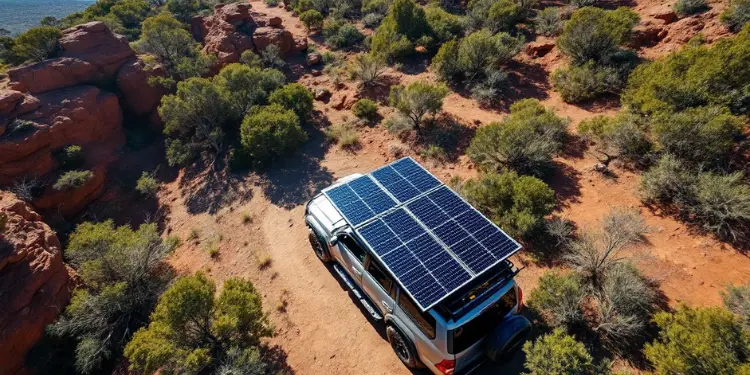
Finding the right power source for camping can be hard. Solar panels 4WD make it easier. This article will show you how to pick and use them. You’ll find them great for your trips.
Key Takeaways
- Portable solar panels give power anywhere and help campers stay off-grid. They are good for the environment too.
- You need to know your power needs, battery types, and choose a good solar controller when picking portable solar panels.
- Enerdrive and Victron offer many products with prices between $49 – $540. Monocrystalline panels are more efficient but cost more than polycrystalline ones.
- Set up is easy with the right tools and maintaining them means checking parts often.
- Pairing solar panels with battery packs stores energy for use anytime, making camping easier.
Benefits of Portable Solar Panels for 4WD Camping

Portable solar panels mean you can have power anywhere your 4WD takes you. They let you enjoy off-grid living without giving up comfort. You can use lights, fridges, and gadgets far from power plugs.
This freedom is great for adventure seekers.
These panels are eco-friendly, too. Using the sun’s energy cuts down on fuel use and pollution. So, camping with portable solar panels keeps nature clean. House Solar Panels supports this green lifestyle by making camping more sustainable and reducing bills for many customers by half.
Key Features to Look for in Portable Solar Panels
Following a study on how portable solar panels can revolutionise 4WD camping, let’s now focus on the key aspects that make a solar panel exceptional. Selecting the appropriate features means your camping configuration is well equipped to handle your power requirements whilst detached from power supply.
- Power requirements: Ascertain the amount of power you necessitate, facilitating the choice of solar panel size and quantity.
- Battery classifications: Understand the contrasts between lead-acid and lithium batteries. Lithium is lighter and possesses a longer lifespan.
- Solar controller: Opt for a high-quality solar controller/regulator to ensure safe battery charging operations.
- Panel examination: Utilise electroluminescence imaging to identify concealed damages in panels.
- Versatility: Evaluate flexible solar panels for convenient attachment on different surfaces.
- Guarantees: Opt for items that provide reliable guarantee stipulations and assured power output.
- Indicators of quality: Superior flexible solar panels exhibit no conspicuous defects and consistently perform well over time.
- Specifications: Scrutinise the specifications closely. Comprehend their impact on performance.
Appropriate selection ensures your devices stay powered throughout your explorations, eliminating inconveniences or concerns.https://www.youtube.com/watch?v=x0NObx7wNhk
Top Portable Solar Panels for 4WD Camping
Selecting the right portable solar panel for your 4WD camping ensures ongoing power, even off the grid. Here, we delve into the top choices, focusing on performance, value, and durability.
| Brand | Products | Price Range |
|---|---|---|
| Enerdrive | 16 | $49 – $540 |
| Exotronic | 7 | $49 – $540 |
| Seraphim | 1 | $49 – $540 |
| SunPower | 1 | $49 – $540 |
| Victron | 19 | $49 – $540 |
Enerdrive and Victron offer a wide range of products, making them versatile choices for different camping needs. Exotronic, Seraphim, and SunPower, although with fewer options, also provide quality solutions within the same price range. This diversity ensures campers can find a panel that fits their budget and power requirements perfectly.
Considering the varied options these brands offer, selecting a panel that matches your camping style and power needs becomes easier. Energy efficiency, matched with affordability, makes these choices top contenders for 4WD camping adventures. The next step involves comparing monocrystalline vs polycrystalline panels to further refine your choice.
Comparing Monocrystalline vs Polycrystalline Panels
After examining the top portable solar panels for 4WD camping, let’s examine the differences between monocrystalline and polycrystalline panels. With this comparison, you can make an educated choice.
| Feature | Monocrystalline Panels | Polycrystalline Panels |
|---|---|---|
| Efficiency | High | Not as high as monocrystalline |
| Cost | More expensive | Less expensive |
| Appearance | Black | Blue |
| Lifespan | Long | Somewhat shorter |
| Temperature Coefficient | Better performance in heat | Performs well, but might not perform as well in high temperatures |
| Examples | Enerdrive 150W Mono ($357.50, Sale $308.75), Enerdrive 190W Mono ($345.40, Sale $298.30) | Enerdrive 120W Poly Slim Black ($276.10, Sale $238.45), Enerdrive 120W Poly ($299.20, Sale $258.40) |
Choosing between monocrystalline and polycrystalline panels depends on your budget, your need for efficiency, and how much space you have. Monocrystalline panels offer higher efficiency and a more streamlined look but come at a higher cost. While not as efficient, polycrystalline panels offer a cost-effective solution without a significant loss in performance. Consider these factors to determine the most suitable solar panel for your 4WD camping needs.
Easy Installation and Maintenance Tips
Setting up and looking after your solar panels is not hard. Follow these tips for a smooth experience.
- Use the flexible solar panel mounting guide from House Solar Panels. It shows you where and how to fix your panels.
- Get all accessories and cables ready before you start. This makes installation quick.
- Keep monitoring tools handy. They check how well your battery and system are doing.
- If you have questions, call customer support. They are there to help with installation issues.
- Choose fast shipping options when you buy parts. This gets everything to you quickly.
- Read simple solar panel installation tips online. They can make the process easier.
- Look at your parts and wires often to keep them in good shape.
- Use tracking solutions to see if your system works well all the time.
Following these steps will help you set up and care for your solar panels easily.
Additional Insights on Portable Solar Panels
Discover more tips on making the most of your solar panels on 4WD adventures—learn how to pick the perfect wattage and pair them with battery packs for endless power.
Choosing the right wattage for your needs
Choosing the right wattage is key for your solar needs. First, calculate your power usage. This means figuring out how much energy you need for your devices each day.
For 4WD camping, consider voltage options like 12V or 24V. There are many products available: 33 at 12V and 10 at 24V. Enerdrive panels range from 10W to 100W. Victron solar panels go from 20W to an impressive 360W.
Exotronic offers fixed options of up to 225W as well.
Pick a panel that fits your requirements and makes camping easy!
Using solar panels with battery packs
Solar panels work great with battery packs. They store energy for later use.
- Battery Types: Lead-acid and lithium batteries are common. Lithium batteries last longer and weigh less. They also charge faster than lead-acid.
- Voltage Options: Look for 12V, 24V, or 48V systems. Choose the right one based on your needs.
- Battery Storage Options: AGM and gel batteries are types of lead-acid batteries. They’re safe but heavier than lithium options.
- Charge Controllers: Use MPPT or PWM controllers with your setup. These manage how much energy flows to your battery, ensuring they charge correctly.
- Inverter Choices: Pure sine wave inverters work best with sensitive devices. Inverter/chargers can recharge your battery while using solar power too.
- Monitoring Devices: These tools help track battery health and system efficiency. Knowing how much energy you have left is crucial.
- Solar Power Efficiency: Higher efficiency means more power from sunlight. Choose panels that convert a lot of light into energy for better results.
- Using Battery Packs Wisely: Use them during night or cloudy days when solar panels aren’t working as well. This way, you make the most of what you’ve stored.
- Wattage Needs: Determine how much power you need before buying a system. Calculate the total wattage required by your devices to ensure proper setup.
House Solar Panels offers insights and products to fit these needs perfectly, helping every camper enjoy their adventures even more!
4WD Solar Panels: Harnessing Energy for Off-Road Adventures
When venturing into the great outdoors in Victoria, having a reliable power source is essential for staying connected and ensuring your camping or off-road experience is stress-free. 4WD solar panels are the perfect solution for adventurers who want to harness the sun’s power while exploring the vast Australian terrain. In this guide, we’ll cover everything you need to know about 4WD solar systems, including their benefits, how they work, and what to consider when choosing the right setup for your caravan, 4×4, or off-road vehicle.
Outline for 4WD Solar Panels Guide
- What Are 4WD Solar Panels?
- How Do 4WD Solar Panels Work?
- Why Choose Solar Power for Your Caravan or Off-Road Adventures?
- Fixed vs Folding Solar Panels: Which Is Better?
- How Much Power Do You Need for a 4×4 or Caravan Setup?
- What Makes Solar Blankets Ideal for Camping?
- Weather Conditions and Their Impact on Solar Performance
- Tips for Installing Solar Panels on Your 4WD Roof
- Comparison of 4WD Solar Panel Options
- How to Maintain Your 4WD Solar System
What Are 4WD Solar Panels?
4WD solar panels are portable or fixed solar systems designed to power your equipment while travelling in a 4×4, caravan, or other off-road vehicles. These panels convert sunlight into usable energy, ensuring you can charge essential devices, power lights, and run small appliances during your adventures.
Key Features of 4WD Solar Panels
- Portability: Many options, such as folding solar panels, are lightweight and easy to transport.
- Durability: Built to withstand tough off-road conditions.
- Efficiency: Available in a range of wattages to suit varying energy needs.
How Do 4WD Solar Panels Work?
These panels are equipped with photovoltaic cells that capture sunlight and produce electricity. The energy generated is either used immediately or stored in a battery system for later use.
- Types of Panels: The most common types are folding solar panels, solar blankets, and fixed panels mounted on the roof of your 4WD or caravan.
- Battery Systems: The energy is stored in 12v batteries, which provide a stable power source during the night or cloudy weather.
Why Choose Solar Power for Your Caravan or Off-Road Adventures?
Using solar power eliminates the need for traditional fuel-powered generators, making it an eco-friendly and quieter alternative for off-grid camping.
Benefits of Solar Power
- Eco-Friendly: Harnessing sunlight reduces reliance on fossil fuels.
- Cost-Effective: After the initial investment, solar power is free, saving you money in the long term.
- Versatility: Perfect for powering fridges, lights, and chargers in your caravan or 4×4.
Fixed vs Folding Solar Panels: Which Is Better?
Choosing between fixed and folding solar panels depends on your specific needs and travel habits.
Comparison Table: Fixed vs Folding Solar Panels
| Feature | Fixed Panels | Folding Panels |
|---|---|---|
| Portability | Permanent installation | Highly portable and lightweight |
| Ideal For | Long-term travellers | Occasional campers |
| Power Output | Typically higher wattage (e.g., 200w) | Moderate wattage (e.g., 120w) |
| Installation | Mounted on roof | No installation required |
How Much Power Do You Need for a 4×4 or Caravan Setup?
Calculating your power requirements ensures you invest in the right-sized solar system for your adventures. Factors to consider include:
- Wattage of Your Devices: Add up the wattage of the appliances you want to power, such as fridges and lights.
- Daily Usage: Multiply the wattage by the number of hours you use each device daily.
Example:
A fridge consuming 60 watts running for 10 hours will require 600 watt-hours of energy.
What Makes Solar Blankets Ideal for Camping?
Solar blankets are a compact and versatile solution for campers who want to travel light. These foldable panels are easy to store and can be set up anywhere there’s sunlight.
Features of Solar Blankets
- Flexibility: Can be laid out on the ground or draped over the roof of your 4wd.
- Lightweight Design: Perfect for those with limited space.
- Efficiency: Despite their small size, they can generate enough power for basic camping needs.
Weather Conditions and Their Impact on Solar Performance
Solar panels are highly efficient in Australia’s sunny climate, but performance can be affected by cloudy days or extreme weather.
- Cloudy Days: Panels still generate power but at reduced efficiency.
- Durability: High-quality panels are designed to withstand harsh off-road conditions, including dust and rain.
Tips for Installing Solar Panels on Your 4WD Roof
Mounting solar panels on your roof ensures consistent access to sunlight while driving or parked.
- Check Your Roof Space: Ensure your vehicle has enough area to accommodate the panels.
- Use Proper Mounting Hardware: Secure the panels to prevent movement during off-road travel.
- Angle Adjustment: Installing panels at the correct angle improves efficiency by maximising sunlight exposure.
Comparison of 4WD Solar Panel Options
Choosing the right solar panel system for your caravan or 4×4 depends on your specific needs. Below is a detailed comparison:
| Solar Panel Type | Wattage | Best For | Price Range |
|---|---|---|---|
| Fixed Panels | 200w+ | Long-term travellers | $400 – $1,000 |
| Folding Solar Panels | 100w-200w | Occasional campers | $300 – $700 |
| Solar Blankets | 80w-120w | Light packers | $200 – $500 |
How to Maintain Your 4WD Solar System
Proper maintenance ensures your solar panels remain efficient and functional.
- Clean the Panels: Remove dirt and debris to maximise energy generation.
- Inspect Connections: Check cables and connectors regularly for wear and tear.
- Store Safely: For portable panels, store them in a dry, secure location when not in use.
Closing Summary: Key Points to Remember
- 4WD Solar Panels: A reliable power source for off-road and camping adventures.
- Types of Panels: Choose between fixed, folding, or solar blankets based on your travel habits.
- Power Calculation: Estimate your daily energy needs to select the right wattage.
- Installation Tips: Ensure proper mounting and alignment for optimal performance.
- Maintenance: Regular cleaning and inspection prolong the life of your solar system.
Explore a wide range of solar solutions tailored for off-road enthusiasts at HouseSolarPanels.com. Start your journey to energy independence today!
Conclusion
Portable solar panels are a smart choice for 4WD camping. They harness the sun’s energy, keeping your devices charged and your fridge running. With many options available, you can find one that fits your needs.
Choose lightweight and durable panels that are easy to set up. Enjoy reliable power on your next adventure!
FAQs
1. What are portable solar panels used for in 4WD camping?
Portable solar panels provide power for devices while camping, helping to charge batteries and run appliances without needing a generator.
2. How do I choose the best portable solar panel for my needs?
Look for factors like wattage, weight, size, and durability. Consider how much power you need based on your devices and how often you’ll use them.
3. Can I set up these solar panels easily at a campsite?
Yes! Most portable solar panels are designed for quick set up. Just unfold them, position towards the sun, and connect to your battery or device.
4. Do I need extra equipment with portable solar panels?
You might need connectors or adaptors to link the panel to your battery or device. Check compatibility before heading out on your adventure.