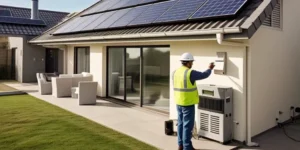
Are you tired of high power bills? Solar panels for home use can slash your costs. In Australia, solar energy can save households over $1,000 per year. This guide will show you how to pick the right solar panels home use.
Ready to harness the sun’s power?
Key Takeaways
- Solar panels can save Aussie homes over $1,000 per year on power bills.
- A 6.6 kW solar system costs $5,000 to $9,000 and suits many Aussie homes.
- Solar panel efficiency drops 0.3% to 0.4% for every degree above 25°C.
- Federal rebates offer certificates worth $35-$39 each, saving thousands on install costs.
- Solar panels last 25-30 years and need yearly cleaning to work well.

Benefits of Solar Panels Home Use

Solar panels slash power bills and cut carbon footprints. They turn free sunlight into usable energy for homes. Most Aussie households save over $1,000 yearly with solar. That’s big money back in your pocket!
These systems help the planet too. They produce clean power without harmful emissions. By 2025, experts say solar will be a smart choice for most Australian homes. It’s a win-win for wallets and the environment.
How Solar Panels Work
Solar panels turn sunlight into power for your home. They have special cells made of silicon that catch the sun’s rays. When light hits these cells, it makes electrons move. This movement creates an electric current.
The panels send this current to an inverter. The inverter changes the power from DC to AC. AC is what your home uses for lights and appliances. Any extra power goes back to the grid.
You can use it later or get paid for it. Next, we’ll look at the different types of solar systems you can choose from.
Types of Solar Systems
Three main solar systems exist for homes: grid-tied, hybrid, and off-grid. Grid-tied systems link to the power network, letting you use grid power when needed. They cost $5,000 to $9,000 for a 6.6 kW setup.
Hybrid systems add batteries, storing extra power for later use. These run $15,000 to $20,000 for a 6.6 kW system with a 10 kWh battery. Off-grid systems work without utility power, costing $30,000 to $50,000.
They need more panels and bigger batteries to meet all your power needs.
Each type suits different homes and budgets. Grid-tied systems offer the fastest payback, often 4 to 7 years. Hybrid setups give more freedom from the grid. Off-grid works best for remote areas.
All types last 25+ years, making them good long-term investments. Your choice depends on your energy goals, location, and budget.
How to Determine the Right System Size
Choosing the right solar system size is key for your home. Here’s how to figure it out:
- Check your power bills. Look at your daily energy use in kilowatt-hours (kWh).
- Count your roof space. A 6.6 kW system needs 25.5 – 34 m² of roof area.
- Think about your energy goals. Do you want to cut bills or go off-grid?
- Get a pro assessment. Solar experts can size your system perfectly.
- Use online calculators. Many websites offer free sizing tools.
- Compare system outputs. A 6.6 kW system makes 23-29 kWh daily, while an 8 kW system produces 28-35 kWh.
Costs and Savings of Solar Panels Home Use
Solar panel costs and savings vary based on system size and location. Let’s break it down:
| System Size | Average Installation Cost | Federal Rebate Value | Typical Payback Period |
|---|---|---|---|
| 3 kW | $4,000 – $5,500 | $840 – $1,080 | 4 to 7 years |
| 5 kW | $4,500 – $7,500 | $1,400 – $1,840 | |
| 6.6 kW | $5,000 – $8,500 | $1,840 – $2,400 | |
| 10 kW | $9,000 – $13,000 | $2,840 – $3,680 |
Feed-in tariffs (FiTs) boost savings:
– NSW: 7.0 pence
– VIC: 5.0 pence
– QLD: 5.5 pence
– SA: 6.0 pence
– WA: 3.0 – 10.0 pence
– TAS: 8.935 pence
– ACT: 8.0 pence
– NT: 9.33 pence
Larger systems cost more but offer bigger savings. FiTs vary by state. Solar panels cut energy bills by up to 50% in four months. HouseSolarPanels.com helps customers find the best system for their needs and budget.
Selecting the Best Solar System for Your Home
After weighing costs and savings, it’s time to pick the right solar system. Your home’s energy needs and roof space guide this choice. A 6.6 kW system suits many Aussie homes, offering good payback times across major cities.
Look at your power bills and daily usage patterns. Match these with panel output and efficiency. Quality matters – choose trusted brands for panels and inverters. Consider adding a battery if you use lots of power at night.
The right system will cut your bills and boost your home’s value.
The Role of Batteries in Solar Systems
Choosing the right solar system is just the start. Batteries play a key role in making your system more useful. They store extra power for later use.
Solar batteries suit homes that use lots of power. They work well in NSW and Victoria. A good battery can cut your power bills and help the planet. Most last about 10 years. A 6.6 kW system with a 10 kWh battery costs $15,000 to $20,000.
Larger 10 kW systems with 14 kWh batteries range from $22,000 to $27,000. Tesla Powerwall is a top brand for solar storage.
Supplementary Insights on Solar Systems
Solar systems have many parts that work together. Let’s look at some key bits that make them tick.
Impact of Panel Orientation and Angle for Solar Panels Home Use
Panel orientation and angle greatly affect solar energy production. North-facing panels in Australia capture the most sunlight. They can produce up to 20% more power than east or west-facing panels.
The ideal tilt angle matches your latitude. For example, Sydney’s best angle is about 34 degrees. Proper setup boosts efficiency and saves money on electricity bills.
East and west-facing panels work well for morning and afternoon power needs. They’re useful when north-facing isn’t possible. Roof angle also matters. Flat roofs need special mounts to tilt panels.
Steep roofs might need adjustments for optimal angles. A pro installer can help you find the best setup for your home.
Effect of Shading and Temperature
Solar panels work best in cool, sunny weather. But shade and heat can lower their power. Even a small shadow can cut a panel’s output by half. Trees, clouds, and buildings all cause shade issues.
Heat also affects solar panels. For every degree above 25°C, panels lose 0.3% to 0.4% power. On a 50°C day, a 400W panel might only produce 363W. This is a 9.25% drop. To fix this, panels need good air flow.
Proper spacing and tilting help keep them cool.
Inverters and Microinverters Explained
Inverters change DC power from solar panels to AC power for home use. They come in two types: string inverters and microinverters. String inverters link multiple panels, while microinverters attach to each panel.
Microinverters cost 15-20% more but work better in shade. They also let you track each panel’s output.
Inverter warranties last 5 to 10 years. This key part of your solar system needs regular checks. HouseSolarPanels.com offers top-quality inverters for your home setup. Choose the right inverter to get the most from your solar panels and cut your power bills.
Rebates and Incentives
Solar rebates slash costs for Aussie homes. The federal Small-scale Renewable Energy Scheme offers certificates worth $35-$39 each. A 6.6 kW system in Sydney nets 63 certificates, saving $3,198 on install.
NSW adds extra perks through its Solar Homes Program.
The rebate value drops yearly until 2031. Act fast to max out savings. Local councils may offer extra cash back. Some power companies give feed-in tariffs for excess energy. Check all options to boost your solar benefits.
Installation and Maintenance Tips
Installing and maintaining solar panels requires care and expertise. Here are key tips to ensure your system works well for years:
- Hire accredited installers who meet Solar Accreditation Australia standards. This ensures quality work and rebate eligibility.
- Check roof condition before installation. Fix any issues to prevent future problems.
- Install panels at the right angle and direction for maximum sunlight exposure.
- Leave space under panels for air flow. This helps manage temperature and boosts efficiency.
- Clean panels regularly with water and a soft brush. Remove dirt, leaves, and bird droppings.
- Update software when prompted. This keeps your system running smoothly for solar panels home Use
- Act fast if you notice problems. Quick fixes can prevent bigger issues later.
Comparing Quotes and Ensuring Quality Installation
Comparing quotes and ensuring quality installation are crucial steps in your solar journey. Here’s a guide to help you make informed decisions:
- Get at least three quotes from different solar installers. This gives you a clear picture of market rates and options.
- Check if the installer is Clean Energy Council accredited. This ensures they follow industry best practices and standards.
- Look for warranties on panels, inverters, and workmanship. Quality systems often come with 10-25 year warranties.
- Read customer reviews and ask for references. Past customers can give you insights into the installer’s quality of work.
- Ensure the quote includes a site inspection. This helps avoid surprises on installation day.
Common Questions About Solar Panels
Solar panels spark many questions. People often ask about costs, savings, and panel life. Most panels last 25-30 years. They need little upkeep – just yearly cleaning. Panels work on cloudy days, but make less power.
Solar systems can power homes fully or partly. The right size depends on your energy use and roof space. Rebates and tax breaks can cut costs. Solar panels boost home value and help the planet.
They cut power bills and carbon footprints. Let’s explore how to choose the best solar system for your home.
Solar Panels for Your Home: A Guide to Buying Solar Panels home Use
HouseSolarPanels.com explores how buying solar panels can transform your energy usage. This blog is worth reading if you’re unsure how a solar system fits your household, want to learn about home solar strategies, or simply wish to reduce bills using solar power.
Solar Power & Solar PV: Why Consider Going Green?
Solar electricity emerges when pv panels absorb sunlight. A solar photovoltaic array transforms the energy into direct current, then your solar inverter converts panels into ac. If panels are installed effectively, they cover the electricity you use daily.
Residential solar systems come in many forms, including solar and battery setups. If you have residential solar panels, you can store surplus via solar battery storage. This minimises reliance on external energy, especially home during the day hours.
Install Solar & Solar PV System: What Do You Need to Know?
When you install solar or install solar panels, you choose a solar panel system sized appropriately for your typical home. A 5kw solar kit might suffice if you track how much electricity you use daily. The cost of the system fluctuates based on size of the system.
Solar installation can be done for a 5kw solar system or a bigger option if you plan to use solar energy extensively. Solar panels home use generally require clear rooftops or minimal shade to yield the best output.
Solar Panels You Need & Solar Panel Home Use: Sizing and Setup
Calculate your usage with a sunspot solar and battery calculator to find the ideal system for your household. If you’re investing in solar, note how many panels will produce enough electricity in your home. A larger array also helps reduce your electricity costs.
Table: Typical Solar System Sizes
| System Size (kW) | Panels | Estimated Annual Output (kWh) |
|---|---|---|
| 3 kW | 8–10 | 4,000–4,500 |
| 5 kW | 12–14 | 6,600–7,200 |
| 10 kW | 24–28 | 13,000–14,400 |
Installing a Solar & Solar and Battery System: Key Benefits
Combining solar and battery ensures generated by your solar array isn’t wasted, even during a power outage. If you already have solar, expanding your setup is still possible.
- Panels are particularly helpful for large households
- Panels produce more energy in full sun
- Possible to install solar on various roof types
- Always consider when installing solar your future needs
Conclusion
Solar power offers a bright future for Aussie homes. It cuts bills, boosts home value, and helps the planet. With the right system, you’ll save money and energy for years. Don’t wait – start your solar journey today.
Get a quote from House Solar Panels and power up your home smartly.
FAQs
1. What’s the deal with solar panels home use?
Solar panels for your home turn sunlight into power. They’re part of a solar PV system that can cut your power bills and help the planet. A typical setup includes panels, an inverter, and sometimes a battery for storage.
2. How much does a home solar system cost?
The cost of solar varies. A 6.6kW system is common for homes. Prices depend on panel quality, system size, and installation costs. Rebates can help. The upfront cost might seem high, but savings add up over time.
3. Can I store extra solar energy?
Yes! Battery storage lets you keep excess solar energy. This means you can use solar power at night or during blackouts. It’s pricey but becoming more popular as tech improves and prices drop.
4. How do I know if my home’s suitable for solar panels home use?
Most homes are good for solar. Check your roof’s direction, shade, and strength. North-facing roofs work best in Australia. An accredited solar installer can assess your place and suggest the right system size.
5. What types of solar panels are there?
Main types are monocrystalline, polycrystalline, and thin-film. Mono panels are more efficient but cost more. Poly panels are cheaper but less efficient. Thin-film is rare for homes. Choose based on your budget and space.
6. How long do solar panels last?
Quality solar panels can last 25-30 years. They lose a bit of efficiency each year, but not much. Good brands offer long warranties. Regular cleaning helps them work better. When they’re done, most parts can be recycled.