Are you looking to cut down your electricity bills? In Australia, one in four homes now use solar panels home electricity. This blog shows how solar power can save you money.
Let’s get started.
Key Takeaways
- Solar panels turn sunlight into electricity for homes. They are made of small units called cells.
- People in Australia can save money with solar panels. They get free power after 4 to 8 years.
- You can pick different types of systems. Some connect to the grid, and others work on their own.
- Before getting solar panels, check how much energy you use. Picking the right system is key.
- Cleaning and checking your solar panels every year helps them work better.
Benefits of Solar Panels for Home Electricity

Solar panels for home electricity offer big benefits. These systems change sunlight into power. This clean energy can run your whole house. You won’t need to rely much on the grid.
It means lower bills and less harm to the environment.
In Australia, 1 in 4 homes now have solar panels. They find these systems pay back their cost in just 4 to 8 years. After that, it’s mostly free electricity. Plus, there are rebates available to help with the initial cost.
These systems work both ways – alone or with the grid. And when there’s not enough sun, they can use batteries or backup power to keep things running smoothly at home.
This makes solar a smart choice for saving money and helping our planet too.
How Solar Panels Work
Solar panels capture sunlight and turn it into electricity. They are made of many small units called solar cells. These cells are what make the magic happen. Light from the sun hits a solar cell, creating power.
The panels send this power to an inverter. This device changes the power from DC to AC, which homes use. Most systems have one big inverter or smaller ones for each panel.
Putting panels facing north gets the most sun, making more power. If they’re too hot above 25°C, they make less electricity—so position matters a lot.
House Solar Panels uses these ideas to help lower energy bills by up to 50%.
Types of Solar Panel Systems
Choosing the right solar panel system is key to saving money and getting the most from the sun. House Solar Panels can help you find the perfect fit for your home. Here are some options:
- Grid-connected systems: These systems connect to your local power grid. You can sell extra electricity back to the grid. They need a grid-interactive inverter and smart meter.
- Off-grid systems: Perfect for places without access to the power grid. They use panels, inverters, batteries, and sometimes generators to meet all energy needs.
- Hybrid systems: They combine grid connection with battery storage. This means you can store power for when the grid goes down.
- Photovoltaic (PV) systems: These turn sunlight directly into electricity. They’re common on rooftops and need an inverter to change direct current (DC) into usable alternating current (AC) for your home.
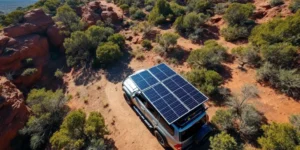
- Portable solar: These small-scale systems are great for outdoor activities or small gadgets. They’re easy to move and set up anywhere sunny.
Each type has its own features that cater to different needs, such as saving more money or being independent from the power grid.https://www.youtube.com/watch?v=dNa2A25U_gk
Choosing the Right Solar Panel System
Upon understanding the variety of solar panel systems, the query may arise on how to select the most suitable one for your abode. The appropriate system can economise and fulfil your energy requirements.
- Assess your energy consumption. Most residences are compatible with a system ranging from 3 to 5 kW.
- Employ resources like SunSPOT to ascertain the size, expenditure, and savings that complement your home.
- Examine the sunlight in your locality. Areas like Alice Springs receive more sunlight, therefore they generate more electricity.
- Consider expense. Initial expenditures for panels have reduced due to the assistance of government rebates.
- Discover incentives. In Australia, aspects like small-scale technology certificates (STCs) can subsidise your system.
- Contrast savings. An efficient system can significantly reduce your bills over time.
- Consult with House Solar Panels for guidance. They are well-informed about energy conservation and selecting the optimal system for Australian households.
In this manner, you choose a solar panel system that is efficient for your geographical location and the amount of power you consume.
Installation and Maintenance
Installing solar panels is a significant move in reducing energy costs. Ensuring it’s done correctly from the beginning is crucial. Here’s what you need to be aware of:
- Engage professionals endorsed for installation. They possess the knowledge required for the safe setup of your system.
- Search for installers accredited by the Clean Energy Council. They adhere to elevated standards.
- North-facing panels harvest more sunlight in the southern hemisphere.
- Position your panels at a tilt angle close to your site’s latitude, within 10°, for optimal performance.
- Assess whether you prefer fixed, adjustable, or tracking frames based on your requirements and financial capacity.
- Once installed, perform a system check annually.
- Maintain the efficiency of your panels through routine cleaning.
Following this, we’ll examine how financial factors influence solar panel decisions.
Supplementary insights on Solar Panels
Supplementary insights on Solar Panels cover all you need to know beyond the basics—like how to save money, grab government perks, and pick spots for your panels. For a deep dive into these topics, keep reading!
Financial Considerations
Solar panels can save you money over time. The payback period for solar PV systems is usually 4 to 8 years. After that, the energy they produce is mostly free. Upfront costs are also going down.
With various Australian incentives and rebates, you can lower your initial investment.
Leasing is another option if you don’t want to buy a system outright. You make monthly payments instead of paying all at once. Also, feed-in tariffs let you earn money by selling excess power back to the grid.
These prices vary across Australia but tend to be less than retail electricity rates. Understanding these financial factors helps in making smart choices about solar energy use at home…
now, let’s look at siting and installation tips.
Rebates and Incentives
Rebates and incentives can make solar power more affordable. In Australia, small-scale technology certificates (STCs) help reduce the cost of solar systems under 100kW. These financial incentives lower your investment in clean energy.
Many Australian states and territories offer their own rebates as well. This means you can save even more when installing solar panels at home. The government also provides guidance for households thinking about rooftop solar.
Siting and Installation Tips
Siting and installation are key to getting the most from solar panels. Proper placement can boost efficiency and reduce costs.
- Positioning Matters: Solar panels should face north in Australia for best results. This angle captures the most sunlight throughout the day.
- Tilt Angle is Key: Tilt your panels to match your latitude within 10°. For example, if you live at 30° latitude, set the panels at 20° to 40° tilt.
- Avoid Shading: Keep panels away from trees and buildings that block sunlight. Continuous partial shading can damage solar modules and reduce output.
- Monitor Temperature Effects: Solar panel output drops by up to 0.44% for every degree above 25°C. Choose locations with good airflow to help keep them cooler.
- Hire Professionals: Always use accredited installers for safety and quality work. They ensure proper placement and connections, which helps in long-term performance.
- Regular Maintenance is Essential: Clean your panels often to remove dirt and dust. Regular checks can spot issues early, keeping your system efficient.
- Choose the Right Frame Type: Frames come fixed, adjustable, or tracking (single or dual-axis). Tracking frames follow the sun’s path and can improve energy capture but may cost more.
- Plan for Obstructions: Identify potential future obstacles like new buildings or trees that may cast shadows later on.
- Consider Local Climate: Install solar systems suited to local weather conditions—like high winds—especially if living in harsher environments.
- Consult with Experts: Speak with solar energy professionals about site-specific factors before installation—this ensures optimal performance suited to your home’s needs.
Following these tips will enhance your solar panel experience…efficiency is achievable!
House Solar Panels
House Solar Panels has over 15 years of experience in solar power in Australia. They help homeowners save money on energy bills by using clean, renewable energy from the sun. Their systems include rooftop solar options and three common sizes: 5 kW, 6.6 kW, and 9.9 kW.
The Australian government offers guidance for households interested in installing solar panels. These roofs can produce a lot of power and lower electricity costs significantly. It’s important to consider panel warranties too—most last between 10 to 25 years for construction materials and promise performance above 80% even after 25 years.
Frequently Asked Questions About Solar Panels
Solar panels can seem complex. Here are some common questions and clear answers.
- What is a solar power system?
A solar power system uses sunlight to make electricity. It includes solar panels, inverters, and sometimes batteries.
- How do solar panels work?
Solar panels capture sunlight using photovoltaic cells. These cells convert sunlight into electricity.
- What types of solar panel systems exist?
There are mainly two types: grid-tied systems and off-grid systems. Grid-tied systems connect to the local electricity grid, while off-grid systems work independently.
- What size solar system do I need?
Most households need a system between 3 kW and 5 kW. The exact size depends on your energy needs.
- How much energy do solar panels produce?
Daily energy production varies by location in Australia. For example, Adelaide produces about 4.2 to 16.8 kWh daily.
- What about installation problems?
Installation should be done by professionals to avoid issues. Regular check-ups will keep the system running well.
- What incentives are available for solar energy?
There are financial incentives like rebates and small-scale technology certificates (STCs). These help reduce upfront costs significantly.
- How long does it take to pay back my investment?
Payback periods for solar PV systems range from 4 to 8 years, depending on usage and savings.
- What warranties come with solar panels?
Most panels have a construction or materials warranty lasting 10-15 years, sometimes up to 25 years for some brands. Performance warranties often guarantee at least 80% efficiency after 25 years.
- Can I install them myself?
While technically possible, DIY installations can lead to safety risks and legal issues with local regulations.
- Will my energy bills really go down?
Yes! Many customers cut their energy bills by up to 50% within just four months after installation with House Solar Panels.
- Is it worth switching to solar energy now?
With declining costs and government incentives, now is an excellent time for many homeowners to consider going solar.
- Can I expand my system later?
Yes! You can add more panels or batteries as your needs grow or change over time.
Future of Solar Energy in Homes
The future of solar energy in homes looks bright. Upfront costs are coming down, making it easier for more people to switch to clean energy. Many Australian states offer incentives and rebates that help reduce the initial expenses.
By 2035, Australia may see a big rise in recycling services for photovoltaic (PV) waste. Homes can expect higher energy production too. The average daily output varies by city, with places like Darwin producing up to 17.6 kWh and Hobart around 14 kWh per day.
Most households should consider solar system sizes between 3 to 5 kW for optimal benefits as technology continues to improve.
Comparing Solar System Sizes for Your Home
| Feature | 5kW Solar System | 6.6kW Solar System | 10kW Solar System |
|---|---|---|---|
| Number of Panels | 15-20 | 18-24 | 27-33 |
| Energy Output (per day) | ~20-25 kWh | ~25-30 kWh | ~40-50 kWh |
| Suitability | Average Australian home | Larger households or high usage | Businesses or large properties |
| Roof Space Required | ~25-35 m² | ~30-40 m² | ~45-60 m² |
| Average Cost (installed) | $5,000 – $8,000 | $6,500 – $9,500 | $12,000 – $15,000 |
| Payback Period | 3-5 years | 3-6 years | 4-7 years |
| Battery Compatibility | Compatible | Compatible | Compatible |
| Best Use Case | Moderate energy consumption | High energy users | Large properties or commercial |
Solar Panels for Your Home: A Smart Investment for Sustainable Living
Investing in solar panels for your home is one of the most effective ways to lower your electricity bills and contribute to a cleaner, greener planet. With rising energy costs and increasing environmental awareness, many homeowners in Melbourne are turning to solar energy to power their homes efficiently and sustainably.
This article provides everything you need to know about buying solar panels, including how a solar system works, the benefits of solar batteries, and how to maximise your savings with solar rebates. Read on to discover why now is the perfect time to invest in home solar and what you need to consider when choosing the right system for your property.
Outline
- What is a Solar System, and How Does it Work?
- Why Invest in Solar Power for Your Home?
- Understanding Solar Rebates and Incentives in Melbourne
- How Many Panels Do You Need for Your Solar System?
- What is the Role of Solar Batteries in Home Solar Systems?
- Choosing a Reliable Solar Installer in Melbourne
- How to Reduce Electricity Bills with Solar Power Systems
- Comparing Solar Panel Efficiency and System Sizes
- Is a 5kW Solar System Right for Your Home?
- Frequently Asked Questions About Buying Solar Panels
What is a Solar System, and How Does it Work?
A solar system converts sunlight into electricity using solar panels mounted on your roof. The system includes:
- Solar Panels: These capture sunlight and convert it into direct current (DC) electricity.
- Inverter: Converts DC electricity into alternating current (AC) for use in your home.
- Battery Storage: Stores excess energy for use during cloudy days or at night (optional).
This solar electricity powers your home, reducing your reliance on the grid and your overall energy costs.
Why Invest in Solar Power for Your Home?
Investing in solar power offers multiple benefits, from saving on energy bills to reducing your carbon footprint.
Key Advantages
- Lower Energy Costs: With solar panels, you generate your own electricity, which significantly reduces your reliance on traditional energy providers.
- Environmental Benefits: Solar energy is a renewable resource that reduces greenhouse gas emissions.
- Increased Property Value: Homes with solar panels are more attractive to buyers due to their cost-saving potential.
By buying solar panels, you can make a long-term commitment to sustainability while enjoying significant financial savings.
Understanding Solar Rebates and Incentives in Melbourne
Homeowners in Victoria can take advantage of government incentives to lower the cost of the system.
What Are Solar Rebates?
A solar rebate reduces the upfront cost of installing solar panels. Under the small-scale renewable energy scheme, you may receive credits for the energy your system generates, which can be used to offset installation costs.
How to Apply for Rebates
- Work with an accredited solar installer like HouseSolarPanels.com to ensure eligibility.
- Ensure your system meets the required solar panel efficiency standards.
- Apply for your rebate through the Clean Energy Regulator.
With rebates, the payback period for solar systems becomes shorter, making them an even more attractive investment.
How Many Panels Do You Need for Your Solar System?
The number of panels required depends on your household’s energy needs, roof size, and budget.
Factors to Consider
- Electricity Usage: Assess your average consumption to determine the system size.
- Roof Space: Ensure you have enough roof space to accommodate the panels.
- Future Needs: Consider potential additions like electric cars or battery storage.
For example, a 5kW solar system typically requires 15-20 panels and is suitable for the average Australian home.
What is the Role of Solar Batteries in Home Solar Systems?
Solar batteries store excess energy generated by your system, providing power when the sun isn’t shining.
Benefits of Solar Batteries
- Energy Independence: Use stored power at night or during blackouts.
- Increased Savings: Store excess electricity instead of sending it back to the grid.
- Future-Proofing: Batteries can be paired with existing solar systems for added flexibility.
With advancements in solar battery storage, homeowners can maximise self-consumption and further reduce energy costs.
Choosing a Reliable Solar Installer in Melbourne
Finding a reliable solar installer is crucial to the success of your solar project.
Tips for Choosing an Installer
- Look for solar accreditation Australia to ensure quality and compliance.
- Choose a solar company with a proven track record in Melbourne.
- Verify their experience with solar installation and maintenance.
At HouseSolarPanels.com, we pride ourselves on providing expert installation services tailored to your home’s needs.
How to Reduce Electricity Bills with Solar Power Systems
A properly designed solar system can drastically reduce your electricity costs.
Maximise Your Savings
- Use power during daylight hours to minimise reliance on the grid.
- Monitor your system’s performance to ensure optimal efficiency.
- Take advantage of solar feed-in tariffs to earn credits for excess electricity sent to the grid.
By making strategic use of your system, you can lower your energy bills and enjoy a faster payback period.
Comparing Solar Panel Efficiency and System Sizes
Efficiency is a critical factor when selecting a solar system.
Key Metrics
- Solar Panel Efficiency: Higher efficiency panels generate more electricity in less space.
- System Size for Your Home: A larger system may produce more power, but it should match your consumption.
For example, a 6.6kW system is ideal for households with higher energy demands, while a smaller 5kW solar system suits moderate usage.
Is a 5kW Solar System Right for Your Home?
A 5kW solar system is one of the most popular choices for Melbourne households.
Why Choose a 5kW System?
- Produces enough energy for the typical home.
- Compatible with solar batteries for added storage.
- Shorter payback period due to its cost-effectiveness.
Frequently Asked Questions About Buying Solar Panels
How Long Do Solar Panels Last?
Most panels have a lifespan of 25-30 years, providing reliable solar electricity for decades.
Can I Install Panels on a Shaded Roof?
Shading can impact the amount of energy generated, so it’s important to assess your roof’s suitability with a professional solar installer.
What Happens to Excess Energy?
Excess energy can be sent back to the grid through solar feed-in tariffs or stored in solar batteries for later use.
Key Takeaways
- Solar panels for your home are a cost-effective and sustainable way to reduce energy bills.
- Take advantage of solar rebate programs to lower installation costs.
- Work with a reliable solar installer to ensure a smooth installation process.
- Consider adding solar batteries to maximise your savings and energy independence.
- Evaluate your household’s energy needs to choose the right system size for your home.
Start your journey to cleaner, more affordable energy today with HouseSolarPanels.com, Melbourne’s trusted partner in solar solutions. Contact us to learn more about buying solar panels and how we can help you power your home sustainably!
Conclusion
Efficient solar panels can change how we power our homes. They offer clean energy and lower electricity bills. By choosing the right system, you can save money and help the planet.
With many options available, it’s easier to find what suits your needs. Embrace solar power for a brighter future!
FAQs
1. What are efficient solar panels?
Efficient solar panels convert sunlight into electricity for homes. They use advanced technology to capture more energy, making them a smart choice for clean power.
2. How do solar panels help with home electricity?
Solar panels generate electricity from the sun, reducing reliance on traditional power sources. This means lower energy bills and less impact on the environment.
3. Can I install solar panels on my roof?
Yes, most roofs can support solar panel installation. It’s best to check with professionals who can assess your roof’s suitability for these systems.
4. What are the benefits of using clean energy at home?
Using clean energy lowers carbon footprints and promotes sustainability. It also leads to savings over time as you rely less on grid power and rising electricity costs.