Living in an apartment and want to go green? Solar panels apartments are now a real option. In Victoria, save up to $500 a year on power bills with solar. This article shows how!
Read on to learn about this eco-friendly choice for apartment dwellers.
Key Takeaways
- Solar panels can save apartment dwellers up to $500 a year on power bills in Victoria.
- Two main types of solar systems for flats are Direct Connected Systems and Solar Sharing Systems.
- The Solar for Apartments Program offers rebates up to $2,800 per home until 28 February 2025.
- Apartment buildings must be no more than 8 storeys tall to qualify for solar panel installation.
- Both tenants and landlords benefit from solar panels, with lower bills and higher property values.
Benefits of Solar Panels for Apartment Buildings

Solar panels provide significant benefits to apartment buildings. They reduce power bills by up to $500 a year for each flat. This represents substantial savings. Owners can also receive up to $140,000 in Victoria.
It’s advantageous for the environment as well. Solar power results in reduced dirty energy use, which benefits our planet.
Landlords appreciate solar panels too. They increase the appeal of flats to renters. Tenants tend to stay longer in solar-powered homes. This results in fewer vacant flats and increased rental income.
The building’s value increases as well. It’s beneficial for tenants, owners, and the environment. Solar power is an intelligent choice for apartment living.
Types of Solar Systems for Apartments
Apartments can use two main types of solar systems. Direct Connected Systems work well for flats with their own roof space. These systems link straight to each flat’s power meter. They’re great for units that have separate power bills.
The tech behind these systems is tried and true. It fits with Aussie rules, so you know it’s safe and legal.
Solar Sharing Systems are perfect when roof space is tight. They use smart tech to split the sun’s power fairly among all flats. This means everyone gets a piece of the solar pie, even if they don’t have their own roof space.
But these systems need special know-how to set up. You’ll need to find a pro who knows their stuff to install one. Both types can help cut power bills and make your building greener.
Let’s look at some key things to think about when putting solar on apartments.
Special Considerations for Installing Solar Panels on Apartments
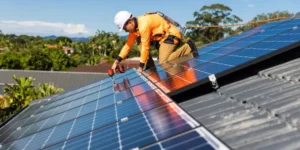
Installing solar panels on apartments needs extra care. Tall buildings pose unique issues. Cranes may be needed to lift panels to high floors. This adds to the cost. Long cable runs are often needed too.
These connect panels to the power system. Traffic management is also vital. It keeps people safe during the install.
Rules apply to which buildings can get solar panels. In Victoria, they must be no more than 8 storeys tall. The building must be finished before applying. Only certain types of buildings qualify.
The property value must not be too high. These rules help make sure solar power is used well in apartments.
Options for Implementing Solar Panels
Solar panels offer many ways to power apartments. One option is a direct connection system. This links panels to a single unit. It’s great for tenants who want their own solar power.
Another choice is a solar sharing system. This spreads power across multiple units. It’s good for buildings with many flats. Both need approval from the Owners Corporation. You must fill out an OC Approval Form within 70 days.
Two OC reps need to sign it.
Getting solar panels takes time. First, do an online check to see if you qualify. Then, fill out an application form. Your solar retailer must get pre-approval to connect to the grid.
This lets you export extra power. Once approved, you have 120 days to install the panels. Safety checks may happen after that. House Solar Panels can guide you through each step. Next, let’s look at some myths about solar panels in apartments.
Common Myths About Solar Panels in Apartments
Many people think solar panels won’t work on apartments. This is not true. Solar panels can work well on many types of buildings, including flats. Some think it’s too costly, but prices have dropped a lot in recent years.
With government help, solar can be a smart choice for many apartment owners.
Another myth is that solar panels need constant sun. In fact, they work even on cloudy days. They just need some light to make power. Some worry about looks, but new designs are sleek and can blend in with roofs.
Lastly, people often think solar panels are hard to keep up. But they need very little care and can last for decades. Next, let’s look at how solar panels work in homes.
Solar Panels for Home Use (Incorporating Residential Insights)
Solar panels for homes can save a lot of money. An average family in a flat can cut $500 off their power bills each year. That’s a big win! The best part? You can get help to pay for it.
Rebates cover up to 100% of the cost, with a max of $2,800 per home. This deal is open until 28 February 2025.
Home solar systems are great for the planet and your wallet. They turn sunlight into power for your house. This means less dirty energy and lower bills. Plus, you can get cash back from the government.
It’s a smart choice for any home owner. Now, let’s look at some extra info about solar panels.
Supplementary Information on Solar Panels
Solar panels offer more than just energy savings. They can boost property value and give tenants a green living option.
Example: Tenant savings vs. landlord benefits
Solar panels in apartments can benefit both tenants and landlords. Let’s look at how each group gains from this green energy solution.
| Tenant Benefits | Landlord Benefits |
|---|---|
| Lower power bills | Higher property value |
| Eco-friendly living | Increased tenant appeal |
| Daytime electricity savings | Better tenant retention |
| Reduced carbon footprint | Potential for higher rent |
| Access to clean energy | Lower building operating costs |
Tenants can save up to 50% on power bills within four months. This is most true when they use power during the day. Landlords can ask for more rent to cover solar costs. But tenants still save money overall. The extra rent is less than the power bill savings. Landlords also gain from having a more valuable property. Solar panels make flats more attractive to eco-minded renters. This can lead to longer tenancies and fewer empty periods. Both sides win with solar. Tenants get cheaper, cleaner power. Landlords get a better asset and happier renters.
Solar rebates and incentives
Solar rebates and incentives can make installing panels more affordable. The Australian government offers several programs to help people switch to solar energy.
- The Solar for Apartments Program gives rebates up to $2,800 per home for flats and units.
- Round 2 of this program is open until 28 February 2025.
- There are 5,000 more rebates available until that date or until they run out.
- Eligible buildings can get up to $140,000 in rebates per property.
- These rebates cut the upfront costs of solar systems for apartments.
- The program aims to help more people access clean, cheap energy.
- Rebates make solar power more affordable for renters and owners.
- Government incentives speed up the switch to renewable energy.
- Solar rebates help reduce power bills for many Aussie households.
- The rebates create jobs in the growing solar industry.
Next, let’s look at some common myths about solar panels in apartments.
Maintenance tips for solar systems
Solar panels need regular care to work their best. Here are some easy tips to keep your solar system in top shape:
- Clean the panels often. Dust and dirt can block sunlight.
- Check for cracks or damage. Fix any issues right away.
- Trim nearby trees. Shade can reduce power output.
- Monitor your system’s performance. Look for drops in energy production.
- Keep the inverter cool and clean. It’s a key part of your system.
- Test the batteries if you have them. Replace old ones as needed.
- Inspect wiring and connections. Loose parts can cause problems.
- Schedule yearly check-ups with a pro. They can spot issues you might miss.
- Update your system software. New updates can boost performance.
- Keep records of your energy output. This helps track long-term changes.
- Clear snow off panels in winter. Snow blocks sunlight and reduces power.
- Check seals and mounts. Make sure everything is tight and secure.
Comparison Table: Direct Connected vs. Solar Sharing Systems
Direct Connected and Solar Sharing Systems offer different ways to use solar power in flats. Let’s compare these two systems:
| Feature | Direct Connected Systems | Solar Sharing Systems |
|---|---|---|
| Roof space needed | More | Less |
| Metering | Suits individually metered flats | Works with shared meters |
| Technology | Well-established | Newer, fewer options |
| Energy distribution | Each flat has its own system | Shared among residents |
| Installation | Standard process | Needs special training |
| Australian regulations | Fully compliant | May need extra checks |
Both systems can help flats save on power bills. Direct Connected Systems are great for flats with their own roof space. They use old tech that follows Aussie rules. Solar Sharing Systems work well when there’s not much roof space. They use smart ways to share power fairly. But they’re newer, so fewer shops can put them in. At House Solar Panels, we can help you pick the best system for your flat.
Steps to Get Started with Solar Panels for Apartments
Moving from comparing solar systems, let’s look at how to start using solar panels in apartments. These steps will help you begin your solar journey.
- Check if you’re eligible. Anyone can do this, even renters or building champions.
- Fill out the online form. You’ll need to give some basic info about your apartment.
- Wait for more info if you pass. The solar team will contact you with next steps.
- Get your building’s value checked. The Victorian Valuer General will do this for free.
- Ask for quotes from solar shops. Try to get at least three quotes to compare prices.
- Pick the best deal for you. Look at cost, quality, and what each shop offers.
- Let the solar shop talk to the power company. They need to get OK’d to connect to the grid.
- Plan the install day. Work with your building manager to set a good time.
- Get your new solar panels put in. The pros will do all the hard work for you.
- Start saving on power bills. Your new solar system will help cut your energy costs.
Solar for Apartments: Everything You Need to Know
Switching to solar energy in apartment buildings and townhouses is an exciting prospect, but it comes with unique challenges and opportunities. From navigating shared solar systems to taking advantage of rebates and grants, this guide explores everything you need to know about solar for apartments. Whether you’re a renter, owner-occupier, or strata manager, find out how you can benefit from solar power.
Can Apartments Have Solar Systems?
While apartment blocks often face challenges like limited roof space, embedded networks, and shared ownership, it’s possible to install solar systems tailored for these conditions. For example, a rooftop solar system can be configured to serve multiple units equitably, offering reduced energy costs for all residents.
What Is Stratum and How Does It Affect Solar?
Stratum refers to the division of ownership in apartment buildings, covering both common property and individual units. Installing solar PV on common property, like rooftops, requires approval from owners and adherence to legal regulations. A special resolution is often needed to allocate costs and benefits fairly among residents.
How Does Solar Work for Townhouses and Units?
Townhouses and units can install individual solar systems or connect to a shared solar system. A single solar system on shared rooftops requires proper design to equitably distribute electricity. Residents benefit through reduced electricity bills, especially with modern solar sharing technology.
What Is an Embedded Network?
An embedded network consolidates the power supply for multiple units, making it easier to manage and share energy generated by rooftop solar. These networks simplify billing and distribution, ensuring that the benefits of solar are felt across the entire building.
How Can Renters Access Solar Benefits?
For renters, options may include agreements with landlords to install solar PV or tapping into a shared solar system. Government programs, such as those detailed on solar.vic.gov.au, provide pathways for renters to benefit from solar rebates and reduced energy costs.
What Funding Is Available for Solar in Apartments?
Programs like Solar Victoria’s offer rebates and funding to encourage the adoption of solar energy in shared buildings. Successful applicants may receive funding to cover part of the cost of solar panel installations. For more details, visit energy.gov.au for a full list of eligibility criteria and support options.
What Should You Know Before Installing Solar?
Before installing solar, recommend seeking at least three quotes from authorised installers. Ensure the system best suits your building’s needs by reading product reviews online. A Solar Victoria authorised solar retailer can provide detailed advice on system size, configuration, and potential feed-in-tariff benefits.
How Does Roof Area Impact Solar for Apartments?
The roof area directly affects how many panels can be installed. Larger systems can power more units but require additional infrastructure to allocate energy equitably. Consider the number of units and their electricity demands when choosing the system size.
How Can Solar Reduce Electricity Bills?
Solar PV significantly reduces energy costs for residents by offsetting electricity consumption with renewable power. Residents connected to solar enjoy lower electricity bills, especially when paired with government incentives and rebates.
Comparison Table: Solar Options for Apartments
| Solar Option | Best For | Key Benefit |
|---|---|---|
| Individual Systems | Townhouses or Units | Autonomy in energy generation |
| Shared Solar Systems | Apartment Blocks | Equitable cost and energy sharing |
| Embedded Network Solar | Larger Apartment Buildings | Simplified billing and distribution |
Key Takeaways
- Solar for apartments is possible through shared systems, embedded networks, or individual installations.
- Government programs like Solar Victoria’s offer rebates and funding for solar adoption.
- Consult authorised solar retailers and read product reviews online before installation.
- Embedded networks make solar integration seamless for multiple residents.
For tailored advice, visit HouseSolarPanels.com to explore solar solutions for your apartment or townhouse.
Conclusion
Solar panels for apartments are a smart choice. They cut energy bills and help the planet. More people in flats can now use solar power. It’s easier than ever to get started. With rebates and new tech, solar is a bright idea for apartment living.
FAQs
1. Can flats really use solar panels?
Yes! Flats can use solar panels… it’s not just for houses. Many blocks are now putting panels on their roofs. It’s a great way to save money and help the planet.
2. How do solar panels work for units?
Solar panels on units catch the sun’s rays and turn them into power. This power can be used by all the flats in the block. It’s like having a big, shared power plant right on your roof!
3. Will solar panels save me money on my power bills?
For sure! While the cost to put them in might seem high at first, solar panels can cut your power bills a lot. Over time, you’ll see big savings. It’s a smart move for your wallet and the earth.
4. Do I need to ask anyone before getting solar panels for my flat?
Yes, you do. You’ll need to chat with your body corporate or strata manager first. They’ll help you sort out the rules and make sure everyone’s on board. It’s a team effort, but it’s worth it!