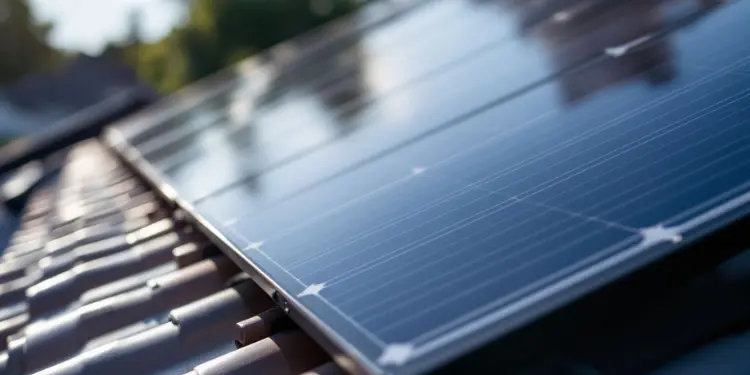
Many homeowners struggle to blend solar power with their roof tiles. Australia leads in solar adoption, with 40% of Queensland homes using solar energy. This article explores solar panels for roof tile installation, offering practical insights.
Ready to transform your roof?
Key Takeaways
- Solar roof tiles blend into your home’s look while making power. They’re part of Building Integrated Photovoltaics (BIPV).
- These tiles can save up to 50% on energy bills in just four months. They’re tough and can handle bad weather better than normal tiles.
- A 6kW solar tile system costs $15,120 to $48,000 to install. That’s more than regular panels, which cost $4,200 to $6,000.
- Solar tiles make less power (165 Watts per square metre) than panels (217 Watts). But they’re often more efficient, at 16-22% vs 10-20% for panels.
- Australia leads in solar use, with 40% of Queensland homes using solar energy. Volt Solar Tiles plan to lower costs to $8,500 for a 5kW system by early 2024.

What are Solar Roof Tiles?

Moving from the basics, let’s explore a key solar innovation. Solar roof tiles blend style with function. These tiles look like normal roof tiles but can capture sunlight. They’re part of a group called Building Integrated Photovoltaics (BIPV).
Solar roof tiles use monocrystalline tech to turn sun into power. They fit right into your roof, unlike bulky panels. This means a sleek look for your home. Plus, you get clean energy without changing your roof’s style.
It’s a smart way to go green and keep your house looking great.
How Solar Roof Tiles Work
Solar roof tiles build on the basics of solar panels. They trap sunlight and turn it into power for homes. Each tile has tiny solar cells inside. These cells soak up the sun’s rays and create an electric current.
The magic happens when sunlight hits the cells. It knocks electrons loose, making them flow. This flow is what we call electricity. A solar inverter then changes this power so it works in your home.
Any extra juice goes to a battery for later use. It’s a smart way to use your roof to power your life.
Benefits of Solar Panels for Roof Tile
Solar roof tiles offer many perks. They blend in with your roof, looking sleek and modern. Unlike bulky panels, these tiles don’t stick out. They’re tough too. They can handle heavy rain and strong winds better than normal tiles.
You can even walk on them safely.
These tiles do more than look good. They turn your roof into a power station. This cuts your energy bills big time. Some folks save up to 50% in just four months. Plus, you’re helping the planet by using clean energy.
It’s a win-win for your wallet and the environment.
Comparing Solar Panels for Roof Tile and Traditional Solar Panels
Traditional solar panels and solar roof tiles each have unique features. Let’s compare them:
| Feature | Solar Roof Tiles | Traditional Solar Panels |
|---|---|---|
| Power Output | 165 Watts per square metre | 217 Watts per square metre |
| Efficiency | 16-22% | 10-20% |
| Cost per Watt | Less than $1.00 | $8.00 |
| Installation Costs (6kW system) | $15,120 – $48,000 | $4,200 – $6,000 |
| Aesthetics | Blend with roof | Stand out on roof |
| Installation | More complex | Simpler |
| Availability | Limited | Widely available |
Roof tiles offer a sleek look. They blend with your roof. Panels are more noticeable. Tiles cost more upfront. But they have a lower cost per watt. Panels are cheaper to install. They’re also easier to set up. Tiles are newer tech. This means fewer installers know how to fit them. Panels have been around longer. More pros can install them. Tiles produce less power per square metre. But they’re often more efficient. Your choice depends on your budget, home, and energy needs. Talk to a pro at House Solar Panels for advice.
Factors to Consider for Installation
Solar roof tile installation needs careful planning. Here are key factors to think about:
- Roof structure: Check if your roof can hold the weight of solar tiles. Most roofs can, but older ones may need extra support.
- Roof angle: A 30-degree tilt is ideal for solar tiles. Steeper or flatter roofs may produce less power.
- Shading: Trees or nearby buildings can block sunlight. Remove shade sources if possible for better energy output.
- Local rules: Some areas have strict building codes. Check with your council before starting the project.
- Energy needs: Work out how much power you use. This helps decide how many solar tiles you need.
- Budget: Solar roof tiles cost more upfront than regular panels. But they can save money over time.
- Roof size: Measure your roof area. This helps figure out how many solar tiles will fit.
- Weather: Strong winds or heavy snow can affect solar tiles. Choose a system that suits your local climate.
- Installer skills: Pick a team with experience in solar roof tiles. They should know how to handle water-proofing and wiring.
- Warranty: Look for products with good warranties. Most solar tiles last 25-30 years.
Practical Insights for Solar Roof Tile Installation
Solar roof tiles need careful planning. You’ll learn key steps for a smooth install. Read on for top tips!
Water and Weather Resistance
Solar roof tiles boast top-notch water and weather resistance. They shield homes from rain, wind, and hail. These tiles have a Class F wind rating, the highest possible. They also hold a Class A fire rating and Class 4 hail rating.
This means they can stand up to harsh weather.
The tiles’ design keeps water out and protects your roof. They lock together tightly, leaving no gaps for leaks. This feature sets them apart from regular solar panels. Homeowners can rest easy knowing their roof is safe in storms.
Cleaning and Maintenance Tips
Solar roof tiles need regular care to work well. Here are some tips to keep them clean and in good shape:
- Clear debris often. Leaves and twigs can block sunlight and cut power output.
- Let rain do most of the cleaning. It’s often enough to keep tiles clean.
- Hose down tiles from the ground if needed. Use a gentle spray to avoid damage.
- Check for cracks or loose tiles twice a year. Fix any issues fast to prevent leaks.
- Trim nearby trees. This stops branches from scratching or shading the tiles.
- Get a pro check every 5 years. They can spot problems you might miss.
- Clean snow off in winter. Use a soft brush to avoid scratching the tiles.
- Keep an eye on power output. A sudden drop may mean it’s time to clean.
- Don’t walk on solar tiles. They’re not made to hold weight and can break.
- Use soft cloths for spot cleaning. Avoid harsh tools that might scratch.
Roof Age and Condition for Solar Panels for Roof Tile
Roof age and condition play a big role in solar panel setup. Old or weak roofs can’t handle the extra weight. A pro should check your roof first. They’ll look for damage, leaks, and weak spots.
Fix these issues before adding panels. This step keeps your home safe and your panels working well.
Good roofs last 20-30 years. If yours is near the end, think about a new one. New roofs work best with solar. They’re strong and can last as long as the panels. HouseSolarPanels.com pros can help you decide if your roof is ready for solar.
They’ll make sure your setup is safe and lasts a long time.
Choosing the Right Solar Installer
Picking a top solar installer is key. Look for firms with solid track records and happy clients. House Solar Panels boasts 10 years in the field and cuts energy bills by up to 50%.
Good installers know local rules and use quality parts. They offer clear quotes and fair prices. Ask about their work on tile roofs. Skilled teams can handle tricky installs without damage.
Check if they use new tech like 3D models for planning. This helps get the best setup for your home. Good installers also give tips on care and upkeep. They should explain how your system will work and what to expect.
Make sure they offer strong warranties and after-sale support. A great installer makes going solar smooth and stress-free.
Additional Considerations
Solar roof tiles come with costs and looks to think about. They can be pricey, but they can make your home look great.
Cost Implications
Solar Panels for Roof Tile cost more than traditional panels. A 6kW system with solar tiles ranges from $15,120 to $48,000. Compare this to $4,200 – $6,000 for regular panels. But solar tiles offer long-term savings.
They cut energy bills by up to 50% in four months.
The price gap may shrink soon. Volt Solar Tiles plan to drop costs. By early 2024, a 5kW system could cost $8,500 after rebates. This makes solar tiles more competitive. The cost per watt is already lower for tiles – less than $1.00 versus $8.00 for panels.
Aesthetic Appeal
Cost isn’t the only factor to think about. Looks matter too. Solar roof tiles blend in with your home’s style. They’re sleek and modern, not bulky like old panels.
These tiles come in different colours and shapes. They match your roof perfectly. You can’t even tell they’re solar panels! This keeps your home’s charm while saving energy. It’s a win-win for looks and function.
Solar Roof Tile for Tile Roofs: Everything You Need to Know about Installing Solar Panels for Roof Tile
HouseSolarPanels.com reveals how a solar roof tile approach can transform your energy usage, particularly for tile roofs. This article is worth reading if you’re planning to install or retrofit your roof with modern panels. By understanding tips for installing solar panels on tile surfaces, you’ll tap into clean energy and save money.
Solar Tile and Solar Panel Installation on Your Tiled Roof: How Do They Work?
Many wonder about tesla-type shingle designs versus standard solar panel setups. Spiders aside, the main question is how to position modules for best output. Aesthetically pleasing solutions ensure your entire roof isn’t overshadowed by mismatched panels.
When dealing with weather conditions, you must consider structural integrity. A nulok roofing system or monier or bristile brand ensures each tile or shingle can handle weight. In australian climates, roof space might be limited, so retrofit plans require careful design.
Panels on a Tiled Roof and Installing Solar Panels for Roof Tile: Is It Feasible?
Yes, installing solar on tile or shingle surfaces is possible. Always check you have enough roof space for a 5kW or larger solar system if that’s your goal. Proper position is essential for maximum sun exposure.
A qualified pest or pest control mention is not relevant here, but do note that tesla or standard panel hardware must align with local regulations for safety. Monier or bristile tiles can be aesthetically matched to keep the property’s look cohesive.
Comparison Table: Tile Types vs. Solar Installation
| Tile/Shingle Type | Approx Weight (kg/m²) | Ease of Retrofit | Best Roof Position |
|---|---|---|---|
| Monier | 45–65 | Moderate | North or NW Facing |
| Bristile | 50–70 | High | North or NE Facing |
| Nulok Roofing System | 40–55 | High | Flexible Orientation |
- Always check structural integrity before installing
- Ensure correct position for full sun exposure
- Solar roof tiles are also an option if you prefer integrated looks
- Installing solar panels on tile requires the right brackets and fittings
Conclusion
Solar Panels for Roof Tile offer a smart way to power your home. They blend style with function, turning your roof into an energy source. These tiles work well in sunny Australia, saving you money on power bills.
With quick install times and good durability, they’re a top choice for many. Solar roof tiles are the future of home energy – sleek, efficient, and earth-friendly.
FAQs
1. Can I install Solar Panels for Roof Tile?
Yes, you can install solar panels on your tiled roof. Many Aussies are doing it. It’s a bit tricky, but solar installers know how to handle it. They’ll use special mounting brackets to fit the panels securely.
2. What are the challenges of installing Solar Panels for Roof Tile?
Tiled roofs can be fragile. Installers need to be careful not to crack tiles. They also need to access the rafters and roof structure. This can make the job harder and slower than on metal roofs.
3. How does Tesla’s solar roof compare to regular solar panels?
Tesla’s solar roof is different. It’s not panels on top of tiles. The tiles themselves are solar. This integrated solar look is sleek, but it’s pricier. It’s also not widely available in Australia yet.
4. Will I need to drill holes in my roof tiles?
Usually, yes. Installers drill small holes to attach mounting brackets. But don’t worry, they seal these holes well to prevent leaks. Some new systems, like Tractile, don’t need drilling.
5. How do concrete tiles differ from terracotta for solar installs?
Concrete tiles are stronger than terracotta. They’re less likely to break during installation. But both types work for solar. Installers just need to be extra careful with terracotta.
6. Can Solar Panels for Roof Tile damage my roof?
If installed correctly, solar panels shouldn’t damage your roof. Good installers use quality mounting systems. They also make sure the panels are secure against harsh weather. In fact, panels can protect your roof from sun and rain.