Sticker shock is the biggest speed bump on the road to rooftop solar. One site quotes $4,000, another says $11,000, and your neighbor swears they got change from five grand. As installers who crunch these numbers daily, we can confirm that solar panel cost isn’t a fixed number—it’s a recipe. Change one ingredient and the price shifts fast.
This guide breaks down what actually affects the cost of household solar in Australia, from parts and labor to rebates and smart savings.
1. The Starting Line-Up: Panels, Inverter, Labor
| Item | Typical Share of Total | What Moves It |
|---|---|---|
| Panels | 45–55% | Brand, power rating, warranty |
| Inverter | 15–25% | String vs. micro, monitoring features |
| Mounting & Cabling | 10–12% | Roof type, tilt frames, cable length |
| Labour & Compliance | 15–20% | Roof pitch, storeys, location |
For a 6.6 kW system with quality tier-1 panels and a good string inverter, expect $6,500–$9,500 after federal STC rebates (but before state ones). Premium features like micro-inverters or panels from brands like SunPower can push the price past $10,000.
2. Hardware Choices That Really Matter
- Tier-1 Panels
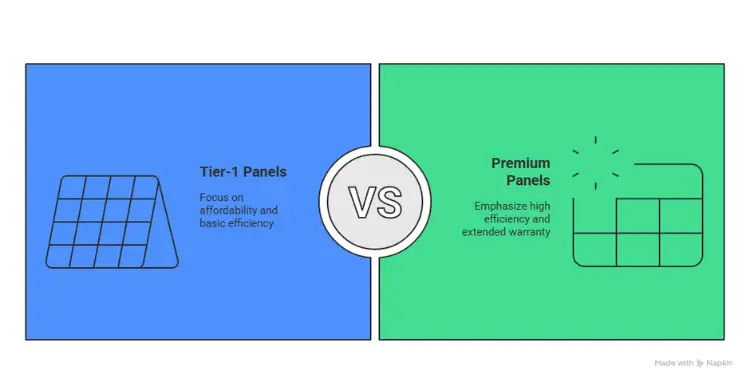
Trusted brands like Jinko, Trina, and LONGi offer great value. Premium panels improve performance and warranty length, ideal if roof space is tight or you’ll stay in the home long-term. - Inverter Type
String inverters are great for simple rooftops. Micro-inverters or DC optimisers cost more ($1,000–$2,000 extra) but can improve output on shaded or complex roofs. - System Oversizing
Installing 6.6 kW of panels with a 5 kW inverter is legal and boosts energy yield affordably.
3. Sneaky Soft Costs That Add Up
Solar panel cost isn’t just hardware—soft costs can spike totals if unlisted:
- Switchboard upgrades: $400–$1,200 for older homes
- Travel/accommodation: Adds up in rural or remote areas
- Scaffolding: Mandatory on two-storey homes in Victoria; allow $300–$700
- Electrical certificates & inspections: Often included, but ask
Tip: Only accept quotes that itemise these extras—otherwise, you’re guessing what’s included.
4. Government Incentives: Your Automatic Discount
Every system earns Small-scale Technology Certificates (STCs) based on system size and postcode. Installers apply this as an upfront discount.
Example: A 6.6 kW system in Geelong earns 94 STCs. At a 2025 spot price of $38, that’s $3,572 off your total price.
State incentives sweeten the deal. Victoria still offers:
- Up to $1,400 rebate
- Interest-free loans to spread upfront cost
That means out-of-pocket prices under $5,500 for many homeowners.
5. Payback Time—Does Solar Actually Save Money?
A 6.6 kW solar system can reduce a typical Victorian power bill by $1,300–$1,600 per year. At a system cost of $7,000, that’s a simple payback of 4.5–5 years.
With 25-year panel warranties, you’ll likely enjoy 20+ years of free electricity—worth $20,000+.
Ways to accelerate payback:
- Run power-hungry appliances midday
- Install a $600 hot water diverter to use excess solar
- Compare feed-in tariffs yearly—2 cents more per kWh = ~$120 extra per year
For a more in-depth understanding of how solar installations can lead to significant savings, watch this informative guide:
6. Should You Get a Battery Now?
Home batteries like the Tesla Powerwall (10 kWh) cost $9,000–$12,000 installed. They make economic sense if you:
- Use 30+ kWh/day
- Want blackout protection
- Don’t export much excess power
We build every system as battery-ready, so adding storage in 2–3 years (when prices drop further) is seamless.
7. How to Read Solar Quotes Like a Pro
Use this checklist to separate solid quotes from sketchy ones:
| Question | Green-flag answer |
|---|---|
| Panel & inverter brands? | Tier-1 panels + Fronius, Sungrow, SolarEdge or Enphase |
| Workmanship warranty? | At least 5 years (ideally 10) |
| CEC accreditation? | Designer and installer ID numbers provided |
| Monitoring included? | App with real-time output and fault alerts |
| All costs disclosed? | Roof type, travel, upgrades all listed |
Red flags: Vague lump sums, missing credentials, no site inspection.
8. Real-World Cost-Cutting Hacks
- Group buy with neighbours
Share crew and scaffold—save $300–$500 per home. - Install during winter
Demand dips, and installers often offer seasonal discounts. - Skip cosmetic upgrades
Black frames look great but don’t add efficiency; silver frames cost less. - Ask about cash discounts
Some installers will trim $100–$200 for avoiding merchant fees.
9. How Roof Type Affects Your Solar Price
Different roofing materials and layouts can quietly influence solar panel cost:
- Tin or metal roofs are easiest (lower labour cost)
- Tile or terracotta roofs require more fragile handling—adds $400–$600
- Steep or multi-pitch roofs may need tilt frames or extra brackets
Our approach: We include drone-based roof scans before quoting so you know what to expect—no nasty surprises.
Bottom Line
Solar panel cost in Australia isn’t one-size-fits-all. It shifts with:
- Panel and inverter choices
- Roof type and height
- Installer quality and location
- Government rebates and STCs
Understand the cost levers, and you can lock in a well-priced system that pays for itself quickly and cuts your power bills for decades.
If you’re just starting your solar journey, don’t miss our Residential Solar Power Systems: 2025 Buyer Guide for everything you need to know before installing a system at home.
Ready to turn sunlight into savings?
Contact us for a free, no-pressure roof assessment and customized solar quote today.