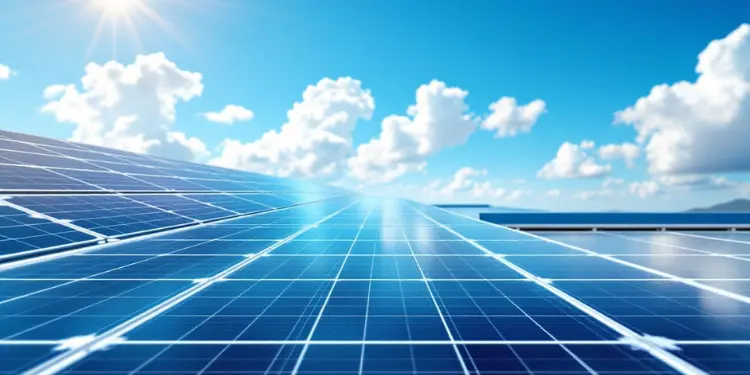
Are you thinking about solar panels for flat roof? Many people worry about getting the most power from their panels. Solar panels on flat roofs can work well with the right setup.
This blog will show you how to tilt your panels for top results. Read on to learn more!
Key Takeaways
- Solar panels on flat roofs work well with the right tilt angle. Sydney’s best angle is 31°, while Brisbane’s is 25°.
- A 10° tilt is good for most places. It only cuts power by 3% in Brisbane and 5% in Sydney.
- Tilt racks and ballasted racks are two ways to install panels. Tilt racks make more power but cost more.
- Clean panels work better. Dirt can cut power by 10%. Panels should tilt at least 10° to help rain clean them.
- Only certified pros can install solar panels in Australia. They must follow strict rules to keep roofs safe and panels working well.
Benefits of Installing Solar Panels on Flat Roofs

Solar panels on flat roofs offer many perks. They’re easy to set up and look great. Flat roofs give more space for big solar arrays. This means you can make more power. The panels don’t stick out, so your building still looks nice.
Best of all, they save you money. Our clients cut their power bills by half in just four months. That’s a big win!
Flat roof solar systems work for homes and businesses alike. They’re quick to install, which saves time and money. The 30% federal tax credit makes them even more affordable. Plus, you can place panels in the best spot to catch the sun.
This helps you get the most power from your system. With all these benefits, it’s clear why flat roof solar is a smart choice.
Importance of Optimal Tilt for Maximum Efficiency
Optimal tilt is key for solar panels on flat roofs. It helps panels catch more sun and boosts energy output. A good tilt also aids self-cleaning. Rain can wash dirt off panels at a 10-degree angle or more.
This keeps them clean and working well. Clean panels make more power. Google found that dirty panels lost half their output in just 15 months.
Tilt affects how long panels last, too. Frameless panels at the right angle can last longer. They lose only 0.5% power each year, while framed ones lose 0.7%. Frameless panels also have a 30-year warranty.
That’s five years more than framed panels. The right tilt means more power and a longer-lasting system.
Recommended Tilt Angles for Flat Roof Solar Panels
Moving from the importance of optimal tilt, let’s look at the recommended angles for flat roof solar panels. These angles can make a big difference in how much energy your panels produce.
| City | Ideal Tilt Angle | 10° Tilt Output Reduction |
|---|---|---|
| Sydney | 31° | ~5% |
| Brisbane | 25° | Less than 3% |
Ideal tilt angles vary by city. Sydney’s best angle is 31°, while Brisbane’s is 25°. But don’t worry if you can’t hit these exact numbers.
A 10° tilt works well too. In Brisbane, it only cuts output by less than 3%. For Sydney, the loss is about 5%. That’s not bad at all!
East or west-facing panels at 10° make 13% less energy than north-facing ones. But they still work great. East-facing panels do best about 40 minutes before noon. West-facing ones peak 40 minutes after midday.
These numbers show that flat roofs can still be good for solar. With the right tilt, you can get lots of power from the sun. House Solar Panels can help you find the best setup for your home.
Installation Methods for Tilted Solar Panels
Solar panels need the right tilt for top performance. Here are some ways to install tilted solar panels on flat roofs:
- Use penetrating racks. These racks attach to the roof with screws or bolts. They’re very strong and can handle high winds.
- Try ballasted racks. These use heavy weights like concrete to hold panels in place. They don’t need holes in the roof.
- Pick the right rack for your area. Ballasted racks work well in Sydney, Melbourne, Adelaide, Perth, and Canberra.
- Install penetrating racks in windy spots. Areas with cyclones need these stronger racks to keep panels safe.
- Get expert help. A pro from House Solar Panels can choose the best method for your roof and weather.
- Check local rules. Some places have laws about how to install solar panels.
- Think about roof strength. Make sure your roof can hold the weight of the panels and racks.
- Plan for wind loads. Tilted panels catch more wind, so they need secure mounting.
- Use corrosion-resistant materials. This helps your system last longer in all kinds of weather.
- Allow for easy cleaning. Set up panels so you can reach them for regular care.
Supplementary Insights
Solar panels on flat roofs need extra care. We’ll look at tilt racks vs. ballasted racks and how to keep panels clean.
Comparison of Tilt Racks vs. Ballasted Racks
Tilt racks and ballasted racks are two common options for flat roof solar panel installations. Each has its own pros and cons. Let’s compare these systems to help you make an informed choice.
| Feature | Tilt Racks | Ballasted Racks |
|---|---|---|
| Installation Method | Attached to roof | Weighted down |
| Roof Impact | May cause leaks if not done right | Less roof damage risk |
| Wind Resistance | Better in high winds | Not for cyclone-prone areas |
| Energy Output | Higher due to optimal tilt | Slightly lower |
| Cost | More expensive | Less expensive |
| Best For | All regions | Wind Region A (Sydney, Melbourne, Adelaide, Perth, Canberra) |
Tilt racks offer better energy output but cost more. They work well in all areas. Ballasted racks are cheaper and easier to install. They’re good for places with less wind. Your choice depends on your location and budget. For expert advice, chat with the team at House Solar Panels.
Maintenance and Cleaning Considerations
Solar panels on flat roofs require regular maintenance. Dirt and dust can reduce their power output by up to 10%. The Clean Energy Council recommends panels should tilt at least 10 degrees.
This assists with self-cleaning during rainfall. However, occasional manual cleaning is still necessary.
Flat roof panels face certain risks. Improper tilting may result in water pooling, potentially causing leaks. Frameless panels may require annual professional inspection. A maintenance plan is advisable to ensure your panels continue to function effectively for years to come.
Structural and Regulatory Considerations
Structural checks are vital for flat roof solar panels. Older buildings need extra care. A pro must check if the roof can hold the panels’ weight. This keeps everyone safe. In Australia, only certified installers can do the job.
They follow strict rules to stop leaks and other issues. These rules make sure your panels work well for years.
Rules also say how to set up panels. Flat panels need a slight tilt membrane. At least 2 degrees is a must. This tilt helps rain wash off dirt. It also keeps the panels cool, which makes them work better.
If you don’t follow these rules, you might lose your warranty. That means you’d have to pay for fixes yourself. Next, we’ll wrap up what we’ve learned about solar panels on flat roofs.
Solar Panels on a Flat Roof: Everything You Need to Know
Installing solar panels on a flat roof offers a unique opportunity to optimise solar energy generation while making the most of unused roof space. This article explains the key factors to consider when planning your flat roof solar installation, including panel tilt, performance, and maintenance, to help you make informed decisions for your property.
How Does Solar Power Work on Flat Roofs?
Solar power systems convert sunlight into usable electricity through a solar panel array. While traditional pitched roof installations are common, flat roofs can also accommodate solar panels installed with specialised mounting systems. These systems ensure the panels are optimally angled to capture maximum sunlight.
Why Is Solar Panel Tilt Important?
Solar panel tilt plays a critical role in energy production. Panels installed on a completely flat surface can accumulate dirt and water, reducing efficiency. Adding a tilt angle and orientation improves performance by preventing debris build-up and enhancing sun exposure.
For best results, panels should have a tilt of less than 10 degrees, ensuring optimal drainage and reducing maintenance needs.
Can Solar Panels Be Installed on a Completely Flat Roof?
Yes, solar panels can be installed on flat roofs using specialised mounting systems. These systems allow the panels to be installed at an angle for better efficiency. Additionally, flat roofs offer the flexibility to install more panels compared to pitched roofs, making them ideal for properties with high energy demands.
What Are the Benefits of Installing Solar Panels on Flat Roofs?
- Efficient Use of Roof Space: Flat roofs provide ample space for larger solar panel arrays, supporting systems like 5 kW and beyond.
- Ease of Maintenance: Panels mounted on a flat surface are easier to access for cleaning and maintenance.
- Flexibility in Orientation: With proper mounting, you can align panels to maximise sunlight exposure.
Factors to Consider for Flat Roof Installations
- Roof Structure: Ensure your roof may support the weight of the panels and mounting system.
- Drainage: Use panels with drainage to prevent water pooling.
- Shading: Avoid installing panels where shadows may reduce efficiency.
The Role of Solar Installers
A professional solar installer will assess your roof’s condition, structural integrity, and orientation to recommend the best mounting system. They also ensure compliance with warranties for panels installed at an angle and proper integration of components like inverters for reliable electricity generation.
Comparing Flat vs Pitched Roof Solar Installations
| Feature | Flat Roof | Pitched Roof |
|---|---|---|
| Tilt Angle | Adjustable using mounting systems | Fixed |
| Panel Count | Potential to install more panels | Limited by roof slope and design |
| Maintenance | Easier access for cleaning | Requires additional safety equipment |
| Energy Production | Dependent on tilt and orientation | Naturally optimised |
Maximising Performance with Flat Roof Panels
To ensure maximum electricity generation, install panels at a tilt and use high-quality mounting systems designed for flat roofs. Selecting frameless or regular solar panels with self-cleaning properties can also enhance efficiency.
Key Takeaways
- Flat roofs offer flexibility and space for larger solar panel arrays.
- Adding a solar panel tilt improves energy production and drainage.
- Work with experienced solar installers to maximise your system’s efficiency.
- Proper maintenance ensures panels stay clean and effective.
- Flat roof systems are ideal for properties with high energy demands.
Explore the benefits of flat roof solar installations with HouseSolarPanels.com, and let us guide you towards clean, sustainable energy solutions tailored to your needs.
Conclusion
Solar panels on flat roofs can be a smart choice. With the right tilt, they work even better. Proper setup helps them catch more sun and stay clean. This means more power for your home or business.
By picking the best angle, you’ll get the most from your solar investment.
Discover how you can further maximise your renewable energy potential by exploring our guide on installing solar panels on your car roof.
FAQs
1. What’s the best angle for solar panels on a flat roof?
The ideal tilt for solar panels on a flat roof is… well, it depends. In Australia, we usually aim for 10 to 15 degrees. This helps rain wash off dirt and boosts power output. But your exact spot might need a different angle.
2. Do I need special gear to tilt my panels?
Yes, you’ll want some kit to prop up your panels. Tilt frames or mounting systems do the job. They lift the panels to the right angle, making sure you catch more sun. These frames are tough and can handle our Aussie weather.
3. Can I just lay the panels flat on my roof?
You could, but it’s not the best idea. Flat panels don’t clean themselves well when it rains. They also don’t catch as much sun. This means less power for you. A slight tilt makes a big difference in how much juice you get.
4. How often should I clean tilted panels?
Good news! Tilted panels need less cleaning than flat ones. Rain does most of the work for you. But it’s smart to check them every few months. If you see lots of dirt or bird poo, give them a wash. Clean panels mean more power for your home.